When the lights go out, a reliable backup power source isn't just a convenience – it's a necessity, especially when you need to keep crucial 240V appliances running. Diving into the world of Top-Rated 220V Generators: Reviews, Comparisons, and Performance Analysis can feel daunting, but it doesn't have to be. As someone who’s spent years sifting through specs and testing gear, I’m here to guide you through selecting the ideal generator to keep your home or adventures powered, no matter what comes your way.
At a Glance: Key Takeaways for 220V Generators
- 220V/240V Power is Crucial: Essential for heavy-duty appliances like well pumps, electric dryers, and central AC units.
- Wattage Matters: Match the generator's running and starting watts to your specific needs, adding a 20% buffer.
- Dual Fuel Offers Flexibility: Generators that run on both gasoline and propane provide versatility and extended runtime options.
- Inverters for Clean Power: If you plan to power sensitive electronics, an inverter generator provides stable, "clean" electricity.
- Safety First: Always operate generators outdoors, far from windows and doors, due to carbon monoxide risks.
- Consider Portability & Noise: Heavier units often require wheels; inverter generators tend to be quieter.
- Transfer Switch Ready: Look for models with 30A or 50A 240V outlets for easy integration with a manual transfer switch for home backup.
Understanding the Power You Need: Why 220V/240V Matters
When we talk about generators, "220V" and "240V" are often used interchangeably to refer to higher voltage power output, distinct from the standard 120V found in most household outlets. Why is this distinction so important? Simply put, many of your home's most essential, power-hungry appliances demand 240-volt power. Think electric clothes dryers, central air conditioning units, electric water heaters, and well pumps. These aren't just conveniences; they're often critical to your home's functionality.
A generator capable of providing 240V power typically features a dedicated 30-amp or 50-amp outlet, allowing you to connect directly to a manual transfer switch. This switch acts as a crucial intermediary, safely channeling the generator's power to specific circuits in your home, ensuring your high-voltage appliances get the juice they need without overloading your system.
Running vs. Starting Wattage: Your Generator's Power Profile
Before you pick a generator, you need to understand two critical wattage figures:
- Running Wattage: This is the sustained power a generator can continuously supply without overload. It’s what keeps your lights on and your refrigerator humming steadily.
- Starting Wattage: Many appliances, especially those with motors (like refrigerators or HVAC systems), require a brief surge of extra power to kick on. This is their starting wattage. Your generator needs to be able to handle these short, peak bursts.
To accurately size your generator, list all the appliances you intend to power, noting both their running and starting wattages. Always aim for a generator with approximately 20% more wattage than your calculated total to provide a safe buffer.
Decoding Generator Types: Finding Your Match
Not all generators are created equal. They come in various forms, each suited for different needs and budgets. For 220V applications, we're primarily looking at standard portable, inverter, and standby generators.
1. Standard Portable Generators
These are the workhorses of backup power. Running on carbon-based fuels like gasoline, propane, or natural gas (with dual-fuel or tri-fuel options offering great flexibility), they are designed to provide robust power.
- Pros: Generally less expensive per watt than inverters, high power output.
- Cons: Can be noisy, produce "dirty" power (less ideal for sensitive electronics), and are often heavy (many exceed 100-200 pounds), even with wheels. Always operate them 5-20 feet away from your home, windows, and doors due to deadly carbon monoxide exhaust.
2. Inverter Generators
Think of inverter generators as the sophisticated siblings of standard portables. They include a power inverter that converts raw AC power to DC, then back to clean AC.
- Pros: Produce "cleaner" and more stable power, making them safe for sensitive electronics (laptops, TVs), significantly quieter, and often more fuel-efficient.
- Cons: Typically more expensive due to the advanced technology.
3. Standby Generators
These are the ultimate "set it and forget it" solution. Permanently installed outside your home, they automatically detect power outages and switch on, often powering your entire house or designated critical circuits.
- Pros: Fully automatic operation, high power output (10,000-25,000+ watts for an average home), seamless transition during outages.
- Cons: Most costly option due to the unit and professional installation requirements, not portable.
It's worth noting that while "power stations" (often called solar generators) are popular, they are essentially large battery banks. They don't generate electricity in real-time, and while great for indoor, quiet use, they require recharging and aren't typically suited for powering high-demand 240V appliances for extended periods.
Top-Rated 220V Generators: Expert Reviews and Comparison
Let's get into the specifics. Here are some of the market's leading 220V generators, evaluated for their features, performance, and suitability for various applications. If you're ready to dive into your options, you can Explore 220v generator options that stand out in the market.
Portable Powerhouses for Home & RV
Many portable generators offer the versatility of 120V/240V output, making them ideal for everything from emergency home backup to powering a large RV.
WEN DF475T Dual Fuel (120V/240V, 4750-Watt)
- Snapshot: A popular choice for those needing reliable 240V power for home backup without breaking the bank.
- Key Features: Dual fuel (gasoline/propane), electric start, transfer switch ready. It's CARB compliant, ensuring it meets strict emission standards.
- Pros: The dual fuel capability is a huge plus, offering flexibility if one fuel source is scarce. Electric start simplifies operation. Its 4750 watts are sufficient for several critical appliances.
- Cons: At 105.8 pounds, it's portable but still a two-person lift. Some users report higher noise levels, which is common for standard portable units.
- Best For: Home backup for essential 120V and some 240V appliances (like a well pump) during outages.
Westinghouse WGen9500DF Dual Fuel (9500 Running Watts)
- Snapshot: A truly versatile and robust option for significant home backup or powering large RVs.
- Key Features: Dual-fuel (gas/propane), 30A and 50A outlets for 120V/240V circuits, push-button electric start, remote start key fob, auto low-oil shut off, and a clear display. It boasts 9500 running watts and runs up to 12 hours on a 6.6-gallon gas tank. This model builds on the strengths of its 6500-watt counterpart.
- Pros: High power output, excellent fuel flexibility, multiple 240V outlets, and convenient remote start. The CO sensor (standard on many newer models) adds crucial safety.
- Cons: Quite heavy at around 200+ pounds, even with wheels. Noise level is 74 decibels, which can be loud for prolonged use or noise-sensitive areas.
- Best For: Whole-home backup for moderate-sized homes, large RVs, or job sites requiring serious power.
DuroMax XP13000HX Dual Fuel Portable (13000 Watts)
- Snapshot: If you need serious power on the go, this DuroMax unit delivers.
- Key Features: High power output (13000 watts), dual fuel capability, electric start, and a CO Alert system. It’s also 50-State Approved.
- Pros: Unmatched power among portables, dual fuel versatility, and essential safety features. It can handle most demanding home appliances.
- Cons: Very heavy at 245 pounds, making it challenging to move without assistance, despite wheels. Its size can be cumbersome.
- Best For: Powering entire homes during extended outages, heavy-duty construction sites, or demanding agricultural applications. The sheer output makes it a compelling choice when you need maximum wattage.
Generac GP9500E (9,500W Running Capacity)
- Snapshot: A solid value proposition from a trusted brand, offering robust tri-fuel flexibility.
- Key Features: 9,500W running capacity, tri-fuel (gas, propane, natural gas), large 7.5-gallon gas tank for long runtime, essential safety features (low oil, CO2 shutdown).
- Pros: Tri-fuel option provides unparalleled flexibility. Long runtime on gasoline. Simple, straightforward control panel. Generac's reputation for reliability.
- Cons: Lacks advanced features like a digital display or app connectivity. Heavy, but sturdy with wheels and handles.
- Best For: Those prioritizing fuel flexibility and raw power for home backup at a competitive price point.
Inverter Generators: Quiet Power for Sensitive Electronics
For cleaner power, quieter operation, and better fuel efficiency, inverter generators are the way to go.
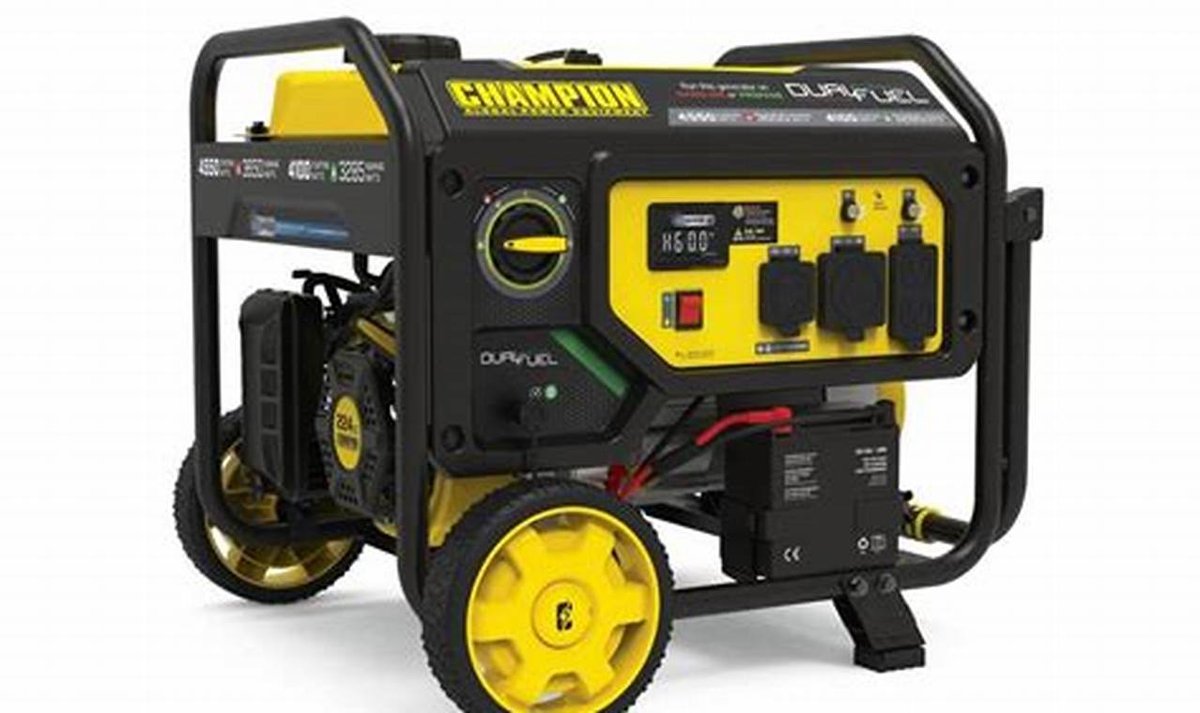
Champion Power Equipment 6500-Watt RV Ready Portable Inverter
- Snapshot: A powerful inverter that doesn't compromise on quiet operation or essential features.
- Key Features: RV Ready with 6500 watts, Quiet Technology, and CO Shield for safety. It's a portable dual-fuel unit with wheels.
- Pros: Excellent for RVs, delivers clean power for sensitive electronics, significantly quieter than standard generators, and dual-fuel adds versatility.
- Cons: Still heavy at 101.4 pounds and has a higher price point due to inverter technology. Its dimensions can be bulkier than some smaller inverter models.
- Best For: RV enthusiasts who need serious power, or homeowners wanting a quiet, clean power source for a range of appliances, including sensitive electronics.
WEN GN625i Open Frame Inverter (120V/240V, 6250-Watt)
- Snapshot: An open-frame inverter that combines good power with clean output, designed for versatility.
- Key Features: CARB Compliant, 6250-Watt output, Transfer-Switch-Ready, Open Frame Inverter design for clean and stable power, versatile 120V/240V options.
- Pros: Delivers clean power (ideal for electronics), good wattage for an inverter, and transfer-switch ready for home integration. The open-frame design can make maintenance easier.
- Cons: "Open frame" means higher noise compared to enclosed inverters, and components are more exposed to elements. Still a potentially cumbersome size/weight.
- Best For: Those who need the clean power of an inverter and 240V output but prioritize slightly higher wattage over ultra-quiet operation or fully enclosed protection. It's great for camping or backup where clean power is key.
DuroMax XP11000iH (Mid-size, Dual-Fuel Inverter)
- Snapshot: An excellent all-around mid-size inverter, offering a balance of power, quiet operation, and features.
- Key Features: Dual-fuel, parallel-capable, enclosed casing for durability and sound dampening. Quiet (61 dB at 20% load, like a dishwasher). Features CO2 shutoff, low oil shutoff, remote start, integrated battery tender, onboard display.
- Pros: Quiet operation, clean power, dual-fuel flexibility, remote start, and robust safety features. Enclosed design protects components.
- Cons: Weighs over 200 pounds, making it less portable for one person.
- Best For: Homeowners looking for a quiet, efficient, and feature-rich backup solution that can handle sensitive electronics and 240V appliances.
Pulsar 7,250-Watt Dual-Fuel Inverter
- Snapshot: A strong contender in the mid-size inverter category, offering excellent value.
- Key Features: Dual-fuel inverter, providing clean power (THD <3%) and stable frequency (59.97-60.09 Hz). Easy assembly.
- Pros: Clean and stable power for electronics, dual-fuel convenience, good wattage for its class, and straightforward setup.
- Cons: While an inverter, noise levels can still be noticeable at higher loads compared to smaller, enclosed units.
- Best For: Budget-conscious buyers who need an inverter's clean power and dual-fuel flexibility for home backup or extended RV trips.
Harbor Freight Predator 9,500 (Large Inverter)
- Snapshot: A large inverter generator known for its power and surprising quietness for its size.
- Key Features: Powers critical circuits in a modest home, four wheels and a fold-out handle for easier movement, very quiet. Includes various plug ends for 120V, 20A and 240V, 30A twist lock.
- Pros: Excellent power output for an inverter, remarkably quiet for its wattage, and highly portable due to well-designed wheels and handle. Provides clean 240V power.
- Cons: Can be a significant investment compared to standard portables of similar wattage.
- Best For: Homeowners who need substantial power for critical circuits, including 240V appliances, and prioritize quiet operation and the benefits of an inverter.
Standby Generators: The Ultimate Automatic Backup
For hands-off, whole-home protection, standby generators are the pinnacle.
Generac 22kW (Best Standby)
- Snapshot: The gold standard for whole-home backup for larger residences.
- Key Features: 22 kilowatts of power, capable of powering a 2,500 sq ft house. Comes with a 200-amp transfer switch, built-in WiFi for status and alerts. Switches to backup power in approximately 23 seconds. 5-year warranty.
- Pros: Fully automatic, powers an entire home, remote monitoring, and rapid transfer time. Industry-leading reliability.
- Cons: High initial cost and requires professional installation.
- Best For: Homeowners seeking comprehensive, automatic backup power for their entire home, including all 240V appliances, without manual intervention.
Generac 13kW (Best Standby for Small Homes)
- Snapshot: A robust standby option tailored for smaller to medium-sized homes.
- Key Features: 13,000 watts (11,500W on natural gas), capable of powering most of a smaller home. Bundled with a 100-amp automatic transfer switch. Switches to backup power in about 23 seconds. 7-year warranty. Performs automatic weekly power checks.
- Pros: Automatic, reliable whole-home backup for smaller residences, excellent warranty, and proactive maintenance checks.
- Cons: Still a significant investment requiring professional installation.
- Best For: Homeowners with smaller homes who want the peace of mind of automatic, comprehensive backup power, including 240V appliances, without going for an oversized unit.
Comparison Table: Top 220V Generator Models
| Model | Type | Fuel Type | Running Watts (Gas) | 240V Outlets | Key Feature(s) | Pros | Cons |
|---|---|---|---|---|---|---|---|
| WEN DF475T | Portable | Dual Fuel | 4750 | Yes (30A) | Electric Start, Transfer Switch Ready | Flexible fuel, good value, transfer switch ready | Heavy, can be noisy |
| Westinghouse WGen9500DF | Portable | Dual Fuel | 9500 | Yes (30A, 50A) | Remote Start, CO Sensor, Push-Button Start | High output, versatile 240V, remote start, safety | Heavy, louder |
| Champion 6500-Watt Inverter | Portable Inverter | Dual Fuel | 6500 | Yes (RV Ready) | Quiet Tech, CO Shield | Quiet, clean power, RV ready, dual fuel | Heavy for an inverter, higher price |
| WEN GN625i Open Frame Inverter | Portable Inverter | Gasoline | 6250 | Yes (30A) | Open Frame, Clean Power, Transfer Switch Ready | Clean power, good wattage for inverter, versatile | Louder than enclosed inverters, exposed components |
| DuroMax XP13000HX | Portable | Dual Fuel | 13000 | Yes (30A, 50A) | Highest Portable Output, CO Alert | Massive power, dual fuel, robust | Very heavy, bulky |
| DuroMax XP11000iH | Portable Inverter | Dual Fuel | 8800 | Yes (30A, 50A) | Quiet (61dB), Remote Start, Enclosed | Very quiet for power, clean, remote start, robust | Heavy |
| Generac GP9500E | Portable | Tri-Fuel | 9500 | Yes (30A, 50A) | Tri-Fuel Flexibility, Large Fuel Tank | Unbeatable fuel flexibility, long runtime, strong | Lacks advanced digital features |
| Pulsar 7,250-Watt Inverter | Portable Inverter | Dual Fuel | 7250 | Yes (30A) | Clean Power (<3% THD), Easy Assembly | Clean power, dual fuel, good value for an inverter | Still portable weight |
| Harbor Freight Predator 9,500 | Portable Inverter | Gasoline | 9500 | Yes (30A) | Very Quiet for Power, Easy Mobility | Excellent power, very quiet for size, highly portable with wheels | Investment cost for an inverter |
| Generac 22kW | Standby | Natural Gas/LP | 22000 | Whole Home | Automatic Whole Home Backup, WiFi, 200A ATS | Fully automatic, immense power, remote monitoring | Expensive, professional installation, not portable |
| Generac 13kW | Standby | Natural Gas/LP | 13000 | Whole Home | Automatic Backup (Smaller Homes), 100A ATS | Automatic, robust for smaller homes, good warranty | Expensive, professional installation, not portable |
| Note: MaXpeedingrods 3500 Watt Portable Inverter is generally a 120V focused unit, though its inclusion in the "Best 220V Generator" article implies a general suitability for portable power needs, often paired with smaller 120V items. For dedicated 220V/240V operation, focus on models explicitly stating 240V outlets. |
Performance Analysis: What Makes a Generator Truly Top-Rated?
Beyond the raw wattage, several performance aspects differentiate a good 220V generator from a great one.
Fuel Flexibility and Efficiency
Dual-fuel (gasoline and propane) is a significant advantage. Gasoline offers higher energy density and is readily available, but propane burns cleaner, stores indefinitely, and can be plumbed to a larger tank. Tri-fuel (gas, propane, natural gas) offers even more options, with natural gas providing a potentially unlimited fuel source if your home is connected. Fuel efficiency, measured by runtime per tank at a given load, also varies greatly. Inverter generators often excel here due to their ability to throttle engine speed based on demand. For maximizing runtime and versatility, you can compare dual fuel generator options.
Noise Levels
This is a huge factor, especially for residential use. Standard portable generators can be quite loud (70+ dB), comparable to a vacuum cleaner or noisy restaurant. Inverter generators, particularly enclosed models, are significantly quieter (50-65 dB), often likened to a dishwasher or normal conversation. This makes a massive difference in user comfort and neighborhood relations.
Portability and Storage
While "portable" is in the name, many high-wattage 220V generators are still incredibly heavy. Wheels and sturdy handles are non-negotiable. Consider where you’ll store it, how you’ll move it, and if you’ll need assistance. Even models around 100 pounds can be challenging to lift into a truck or over obstacles.
Safety Features
Modern generators come with critical safety features:
- CO Sensors/Shutoff: Detect dangerous levels of carbon monoxide and automatically shut down the generator. This is paramount for preventing accidental poisoning.
- Low-Oil Shutoff: Protects the engine from damage by turning off the generator if oil levels drop too low.
- Overload Protection: Prevents damage to the generator and connected appliances if too many devices are drawing power.
Power Quality (THD)
This applies primarily to inverter generators. Total Harmonic Distortion (THD) measures how "clean" the power is. A lower THD (typically <5%) means the power is stable and safe for sensitive electronics. Standard generators can have higher THD, risking damage to devices like laptops, smart TVs, and medical equipment.
Making the Right Choice: Your Actionable Checklist
Choosing the best 220V generator involves more than just picking a top-rated model. It’s about matching a generator to your specific needs.
1. Calculate Your Energy Needs Accurately
- List Appliances: Make a comprehensive list of every 120V and 240V appliance you want to power.
- Identify Wattage: For each, find its running and starting wattage (usually on a sticker, in the manual, or online).
- Sum It Up: Add up all running wattages. Then, identify the single highest starting wattage among your critical appliances. Add that to your total running wattage.
- Add a Buffer: Always add at least 20% to your calculated total to prevent overloading and extend the generator's life.
2. Prioritize Your Voltage Needs
- Critical 240V Appliances: Do you need to run your well pump, electric dryer, or central AC? If so, a generator with a 30-amp or 50-amp 240-volt outlet is non-negotiable.
- Transfer Switch Readiness: For home backup, look for "transfer switch ready" models. This means they have the correct outlets to safely connect to your home's electrical system via a manually installed transfer switch.
3. Factor in Fuel and Runtime
- Fuel Availability: What fuel types are easiest for you to acquire and store?
- Runtime Expectations: How long do you anticipate needing continuous power? A larger fuel tank or dual-fuel options can extend runtime significantly. Remember that different fuels yield varying power outputs (e.g., gasoline generally provides more power than propane for the same unit).
4. Consider Your Environment and Usage
- Noise Restrictions: Are there local ordinances or close neighbors that demand quieter operation? An inverter generator might be worth the investment.
- Portability: Will you be moving it frequently, or is it a stationary backup?
- Storage: Do you have a dry, secure place to store a large, heavy machine?
5. Budget and Features Alignment
- Cost vs. Features: Prices vary widely. Decide which features are "must-haves" (e.g., dual fuel, electric start, CO sensor, inverter technology) versus "nice-to-haves."
- Long-Term Value: While a cheaper generator might seem appealing, a more durable, fuel-efficient, or feature-rich model could save you money and headaches in the long run.
Critical Safety Considerations
Generators can be dangerous if not operated correctly.
- Carbon Monoxide: This is odorless and deadly. ALWAYS operate fuel generators outdoors, at least 5-20 feet away from your home, garages, sheds, or any building. Position the exhaust away from doors, windows, and vents. Never run a generator in an enclosed space, even a garage with an open door.
- Refueling: Always turn off a fuel generator and allow it to cool before refueling to prevent fire hazards.
- Electrical Safety: Use heavy-duty, outdoor-rated extension cords. Ensure proper grounding. If connecting to your home, a professional-installed transfer switch is essential to prevent backfeeding power into the grid, which can injure utility workers.
Common Questions and Clear Answers
Which 220V generator is best for home backup?
For comprehensive home backup, models like the Westinghouse WGen9500DF (portable, dual fuel, high wattage) or the DuroMax XP13000HX (extreme power, dual fuel) are excellent choices among portables. If you prioritize quiet, clean power for sensitive electronics, the DuroMax XP11000iH or Harbor Freight Predator 9,500 inverter generators are top contenders. For completely hands-off power, a standby generator like the Generac 22kW is unparalleled.
Is the WEN GN625i Open Frame Inverter suitable for camping?
Yes, the WEN GN625i is ideal for camping where you need 240V power. Its 6250-watt output is robust, and as an inverter, it provides clean, stable power for sensitive electronics you might bring. The open-frame design means it might be a bit louder than enclosed inverters but offers ample power.
How quiet is the Champion 6500-watt Generator?
The Champion 6500-watt RV Ready Portable Inverter generator features "Quiet Technology" designed to significantly reduce noise output compared to traditional generators. While specific dB levels can vary with load, it's notably quieter than standard models of similar wattage, making it more pleasant for camping or residential backup.
Are dual fuel generators better than single fuel?
Generally, yes. Dual fuel generators offer superior flexibility and convenience. Being able to switch between gasoline and propane means you have options if one fuel source is scarce. Propane stores longer without degrading, and gasoline offers higher energy density. This versatility often extends runtime and provides peace of mind.
What makes the DuroMax XP13000HX unique?
The DuroMax XP13000HX stands out for its exceptionally high power output (13,000 watts) among portable generators, allowing it to power a wide array of appliances, including multiple heavy-duty 240V items. Its dual fuel capability, electric start, and CO Alert safety feature further enhance its appeal as a robust and versatile power solution.
How can I tell if my generator is overloaded?
Common signs of an overloaded generator include lights dimming or flickering, appliances turning off unexpectedly, or the generator's engine sounding louder, strained, or bogging down. Some generators also have an overload indicator light. If you notice these signs, immediately turn off or unplug non-essential appliances, or power down the generator for a few minutes. Overworking a generator can lead to overheating, permanent damage, or even fire.
How long can a generator run continuously?
Portable generators generally require periodic rest. Check your owner's manual, but a common recommendation is to allow them to cool down for 30+ minutes after 24+ hours of continuous use. Drawing less power will extend the runtime per tank. Standby generators are designed for longer continuous operation, performing automatic weekly checks. Always adhere to the manufacturer's guidelines for optimal lifespan and safety.
Powering Forward with Confidence
Navigating the options for 220V generators means understanding your specific power needs, the types of generators available, and the features that matter most for your application. Whether you need to run critical 240V appliances during a home outage, power a demanding RV, or ensure clean power for sensitive electronics, there's a top-rated generator built for you. By carefully considering wattage, fuel type, noise levels, safety features, and portability, you can make an informed decision and be prepared for any power challenge. Don't wait for the next outage to start your search; equip yourself with the knowledge to make a confident choice today. Remember, preparedness is power. For more choices and detailed specifications, you can always Explore 220v generator options available.